

One of the most important parts of small business cash flow management is not just knowing how much money you have. It is knowing when it is going to move.
A business can look profitable on paper and still feel cash pressure if a major expense is due before client payments arrive. That is where weekly cash flow forecasting becomes a genuinely useful tool.
Watch the full walkthrough below, including a live demo of the free cash flow spreadsheet:

Monthly vs. Weekly: What’s the Difference?
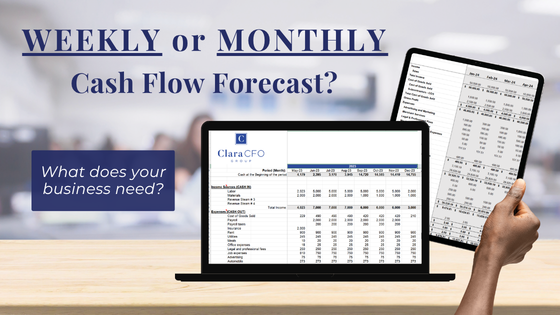
Both approaches are part of smart business cash flow planning. The difference is the level of detail.
Monthly forecasting works well when you have a solid cash buffer and the exact day an expense hits is not a concern. Weekly forecasting is better when timing matters, and for a lot of growing businesses, it does.
When payroll goes out on the 15th but your largest client does not pay until the 20th, a monthly view will not show you that gap. A weekly one will.
When Weekly Forecasting Makes Sense
Weekly visibility is most useful when cash is tight, revenue is back-loaded toward the end of the month, or a major financial decision is coming up. This includes paying down debt, adjusting your owner’s draw, or managing a slower sales period.
If the exact timing of a payment could create a problem, the weekly view is the right tool.
Once you have built up a healthy cash buffer and week-to-week timing is no longer a concern, you can shift back to monthly forecasting. Think of weekly as the closer lens you use when you need it.
How to Forecast Cash Flow on a Weekly Basis
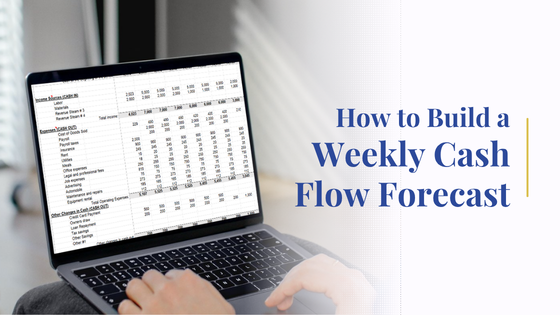
The structure of a weekly cash flow forecast is like a monthly one, broken down by week. Start with your beginning cash balance, then map out when income is actually expected to land, not what the monthly total will be.
For a service-based business that bills at the start of the month, cash may not actually arrive until week three or four.
On the expense side, your prior month’s financials are the best starting point for payroll cash flow timing and other recurring costs. Look at what hit and when, and use that as your baseline.
Cash In
- Expected revenue by week, mapped to when payments are actually likely to land
- Any one-time income like a speaking fee or project deposit, entered in the specific week it is expected
Cash Out
- Payroll and payroll taxes, mapped to your actual pay dates
- Fixed expenses like rent and insurance, entered in the week they are due
- Variable expenses like utilities, based on when they typically hit
- Credit card payments, loan payments, or line of credit activity (these are balance sheet items, not P&L, but they absolutely affect your cash)
- Owner’s draw and tax savings, if applicable
It is also worth setting a minimum cash threshold inside the spreadsheet. If your balance falls below a number that worries you, the template will flag it. This way, you can plan ahead before it becomes urgent.
What Your Financial Forecast Is Actually Telling You
Once your numbers are in, look at the 13-week cash flow forecast trend. Is your ending cash balance higher or lower than where you started?
If cash is steadily declining, that is a signal worth paying attention to. It might mean expenses are running high relative to income, the owner’s draw needs to be adjusted temporarily, or revenue needs a closer look.
The forecast does not make decisions for you, but it helps you see where the right questions are.
Use the Free Cash Flow Forecast Template
The free cash flow template is available at claracfo.com/cashflow. It includes both a monthly and weekly tab and has been downloaded over 10,000 times.
No need to build anything from scratch.
Key Takeaways
- Weekly cash flow forecasting shows you timing, not just totals
- A 13-week cash flow forecast is most valuable when cash is tight or payment timing is inconsistent
- A complete forecast includes operating expenses, balance sheet items, owner’s draws, and tax planning for small business owners
- A declining cash trend over time is a signal to make strategic adjustments
Want Support Beyond the Spreadsheet?
Cash flow management is one piece of a larger financial picture. If you are a service-based founder or agency owner who wants more than a spreadsheet, working with a fractional CFO or outsourced CFO can give you the strategic financial leadership your business needs to grow with confidence.
At Clara CFO Group, we provide fractional CFO services exclusively for service-based businesses earning $1M or more. Whether you are running on EOS and need a CFO for EOS who can take full responsibility for the financial scorecard, or you want a reliable financial partner to assist you in making better decisions, our Financial Clarity Solution is designed specifically for those purposes.
Book a Discovery Call to learn how Clara CFO Group can support your business.